How the British Club Style Became the Ralph Lauren Aesthetic
- Dec 15, 2025
- 2 min read
Updated: Jan 31

Ralph Lauren-inspired interiors have seen a resurgence in popularity over the past year. The dark mahogany wood, deep jewel tones, and traditional silhouettes are part of a broader trend away from stark minimalism and toward a more layered, heritage-rich aesthetic. But where did this look come from and why does it feel so iconic?
British Gentlemen's Clubs in 1700s-1800s
Gentlemen's clubs were popular in London in the 18th-19th century. These were elite social clubs where wealthy men could go to network, read, and conduct business away from the public eye. These clubs had extensive libraries, billiard rooms, lounges, and smoking rooms.

The design style in these clubs were remarkably consistent:
Dark wood paneling
Libraries and bookcases
Tufted leather upholstery
Oriental rugs
A dominant fireplace
Deep, masculine color palettes
While wealthy homes already had many of these elements, the clubs perfected and concentrated the style into spaces that were entirely dedicated to male relaxation and formality, cementing its place as a distinct interior design aesthetic. This look became known as the “Club Style” -- a codified formula for what intellectual, privileged, upper-class male space should look like.
American Adoption of "Club Style" (1870-1900)
A select few American families became extremely wealth during the Gilded Age. Newly rich and seeking cultural legitimacy, they adopted the "Club Style", hoping to emulate the established heritage of European aristocracy.
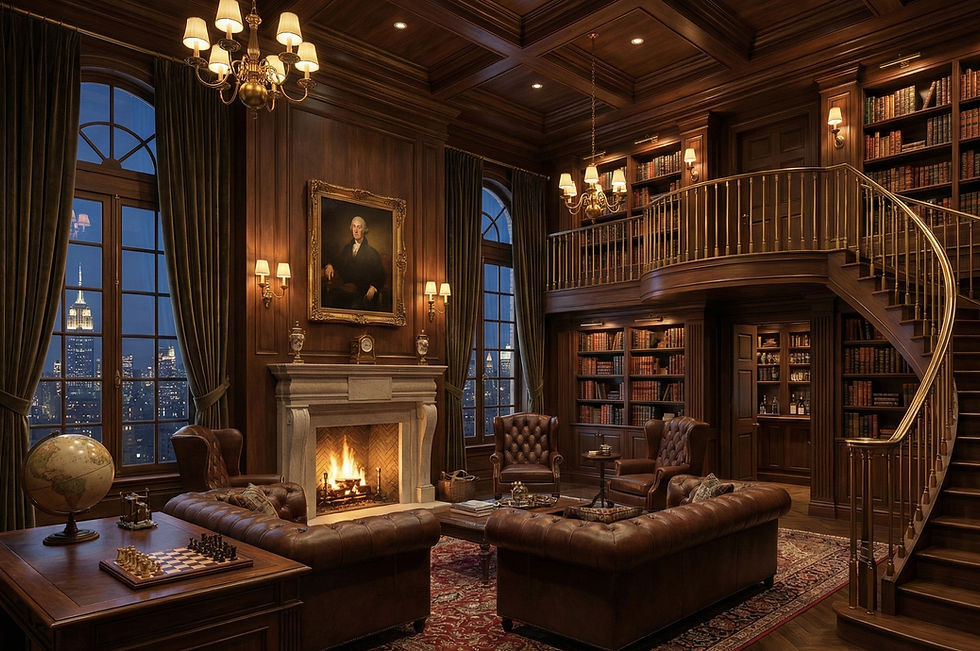
The aesthetic spread to law firms, Ivy League institutions, and social clubs, cementing the British club style as a marker of prestige in the United States.

Ralph Lauren Adopts the Look For His Brand (1960s-1980s)
Ralph Lauren's Polo line was positioned as a brand built on British prestige, Ivy League heritage, and upper-crust leisure culture. Retail spaces were styled with mahogany paneling, equestrian imagery and collegiate motifs. By the 1980s, Americans came to see the British club style as the "Ralph Lauren aesthetic".

So What Does This All Mean?
The style has English origins and spans more than 300 years. It traces a clear lineage: English country houses → British gentlemen’s clubs → “new money” Americans → Ralph Lauren’s.
The aesthetic has long been associated with status and social signaling. Dark woods, tailored silhouettes, and layered materials historically communicated wealth, permanence, and privilege.
The style was originally designed for men. This explains its reliance on masculine color palettes and its prevalence in traditional libraries, law offices, private clubs, and cigar lounges.
Why This Matters (from a design perspective)
When recreating a heritage-rich design style, understanding its historical context can be tremendously helpful. In this case, recognizing the look as English immediately rules out a Rococo fireplace in favor of a Georgian or Neoclassical one. Knowing the space was historically male-dominated informs the details—whiskey decanters, cigar boxes, leather-bound books, and other masculine-coded accessories to help reinforce the intended atmosphere.
About Aetura Studio
Aetura Studio is a remote interior design studio specializing in heritage-inspired spaces for residential clients. Grounded in timeless design and editorial detail, we create spaces that feel layered, elegant, and deeply personal.


Comments