Everything You Need to Know About Murano Glass Chandeliers
- Dec 1, 2025
- 4 min read
Updated: Jan 31

If you’re anything like us you’ve probably been seeing these fluted chandeliers all over social media. These are Murano glass chandeliers. Here’s everything you need to know.
Handblown Glass Made in Northern Italy
Murano glass is a type of hand-blown glass made by artisans in Murano, Italy, an island off the coast of Venice. When you hear the term "Venetian glass" this is referring to Murano glass. Glassmaking in this region started in the 1200's but chandeliers specifically were not introduced around 1700 in response to the rising popularity of Bohemian crystal.

Traditional Styles From the 1700's Are Still Popular
The time period in which these styles were first introduced — the Baroque and Rococo eras — strongly influenced their design. The most iconic chandelier style to come out of this period is the Rezzonico (sometimes referred to as Ca’ Rezzonico, after the Venetian palazzo).
Rezzonico chandeliers feature multiple tiers, intricate botanical motifs, and arms constructed from segmented glass elements, and they are almost always multi-colored. Among historical Murano styles, Rezzonico is the most grand and opulent.
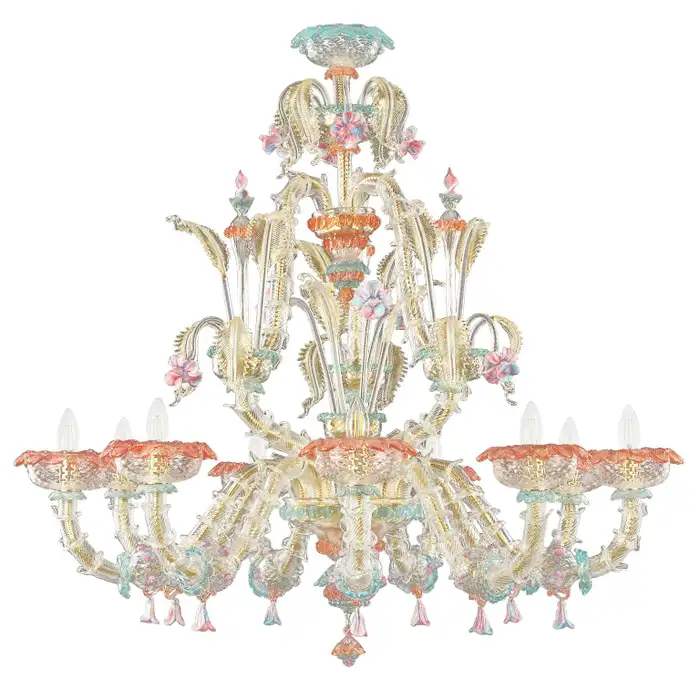
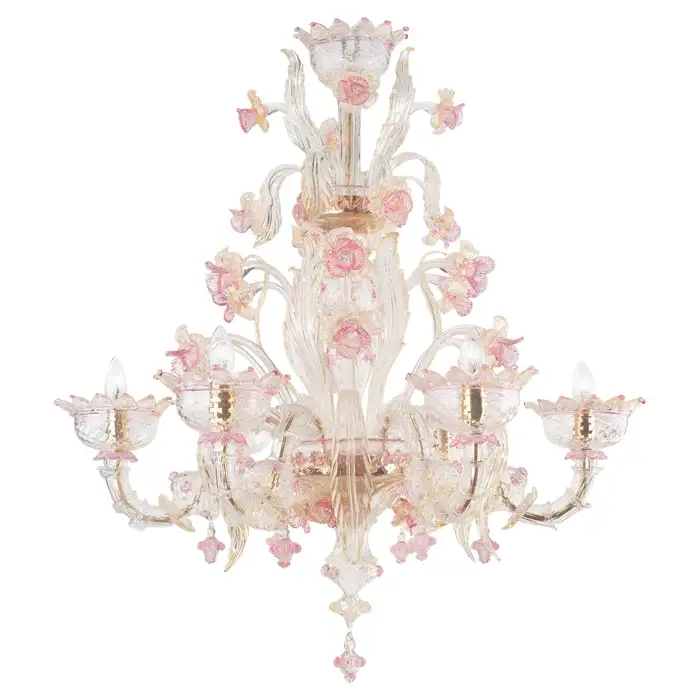
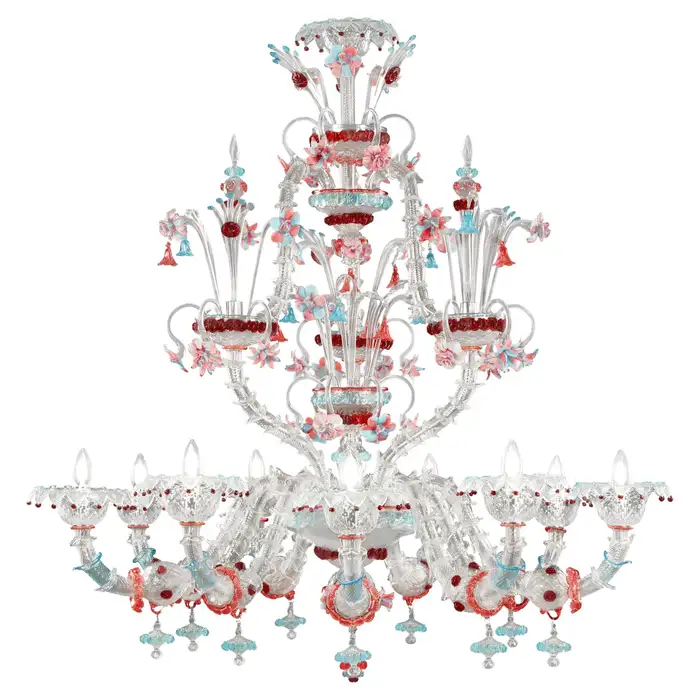
Other styles from the 1700s share similar characteristics but differ in how the arms are constructed. Non-Rezzonico pieces use continuous glass tubes rather than separately beaded glass segments to cover the arms.
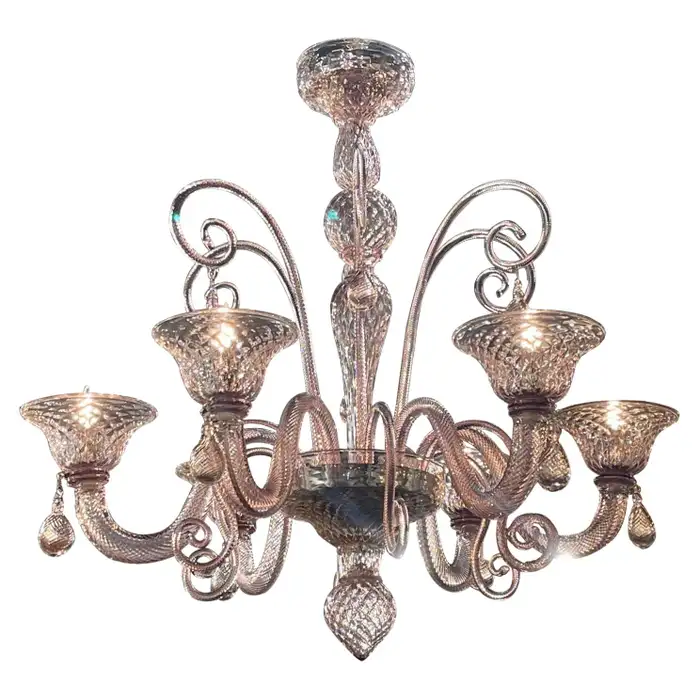
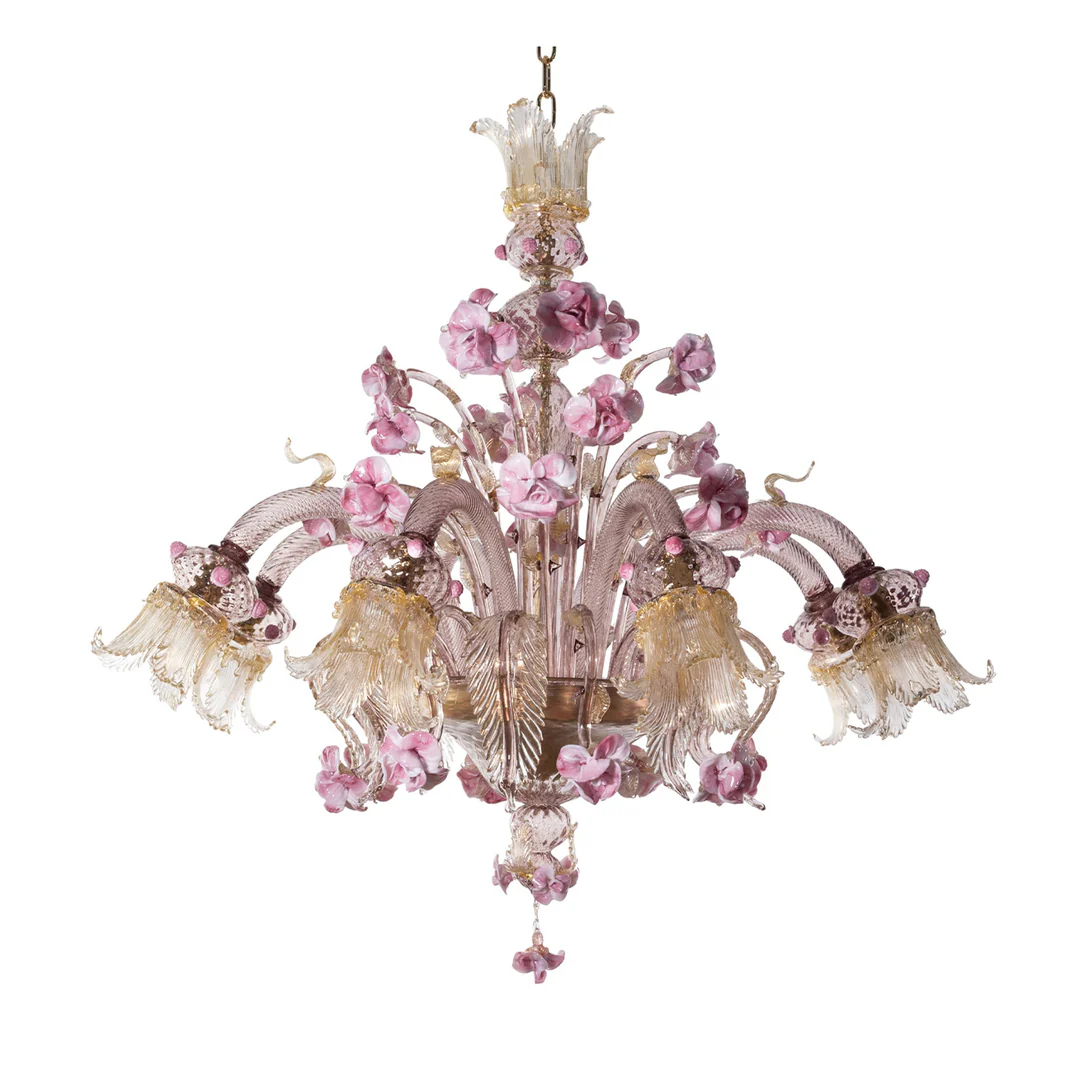


Today, these traditional Murano chandelier styles are most commonly found in Venetian palazzi, luxury Italian hotels, and older European homes.

They are also popular today among antique enthusiasts who enjoy mixing heritage-rich pieces with their contemporary decor. A well-known example is Zooey Deschanel, who has incorporated a Murano chandelier into the dining room of her New York City home, as featured in her interview with Architectural Digest.

Contemporary Styles From1950s-70s Lean More Art Deco
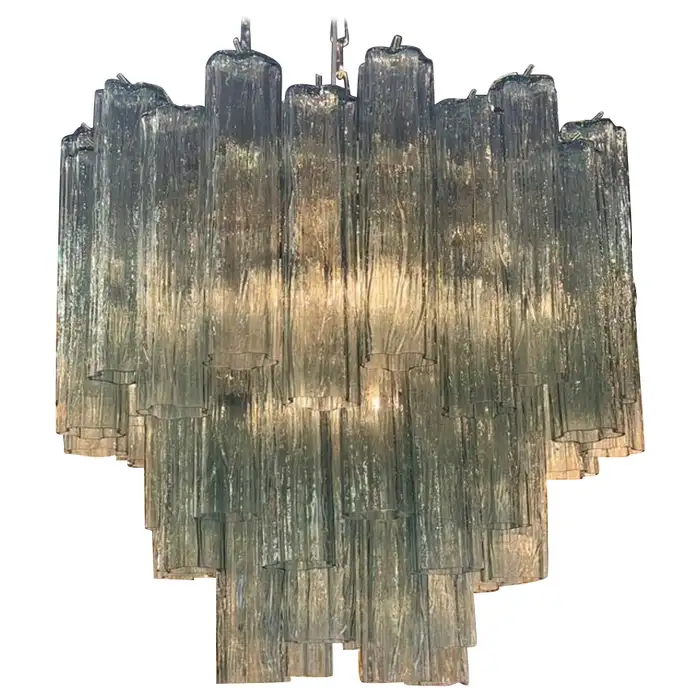
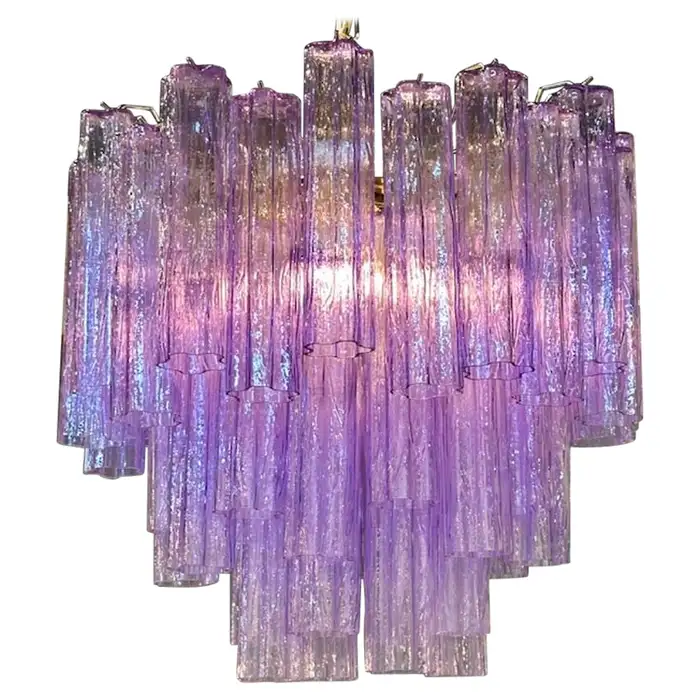
A new wave of Murano chandelier styles were introduced in the 1950s–70s. These modernized designs frequently featured glass pieces positioned in concentric tiered rings. Below from L to R are petal, tronchi, and shell style Murano chandeliers that were all introduced during the mid-century.


The Murano style currently dominating social media is the Tronchi chandelier. These fixtures are typically monochromatic and produced in a wide range of colors. Softer hues—such as blush pink, lavender, and pale blue—have become especially popular.

Tronchi chandeliers are especially breathtaking when illuminated, as the light concentrated at the base of the tubes gradually diffuse downward, creating a soft color gradient through the textured glass. This makes them popular in color themed rooms.


Murano vs Other Chandeliers Comparison
When evaluating chandelier types for your home, understanding these key differences may help you narrow down your decision.
Murano chandeliers are glass-dominant, meaning there is very little visible metal. This contrasts with many other European chandeliers, where both glass and metal are meant to be seen. Both are beautiful, but they create distinctly different effects: Murano chandeliers tend to read as standalone statement pieces, while the visible metal in other chandeliers allows them to visually connect to other metal finishes in the room.

Murano chandeliers glow, not sparkle. Murano chandeliers are made of blown glass, rather than cut glass crystal. Cut-glass chandeliers sparkle even when unlit, while Murano glass requires illumination to fully reveal its effect. Because of this, Murano chandeliers are often overlooked in showrooms and antique stores — which is why they’re seen less often in American homes, and why they feel special in homes that have them.

Murano chandeliers come in a wide range of colors. This is a clear advantage they have over crystal chandeliers, which are almost exclusively colorless. Murano chandeliers are produced in a broad spectrum of hues, making them a more relaxed and flexible option for color-driven rooms or less formal settings.

When to Use Murano Glass Chandeliers
While there are no universal rules that can guarantee a Murano chandelier is right for your space, there are some helpful observations I can share based on my own experience.
Traditional-style Murano chandeliers tend to read as more antique, and feel more distinctly Italian than modern Murano chandelier types. I’ve found that these work well in rooms where other antique Italian design elements are already present. For example, the room below features a large replica of the Renaissance painting The Conversion of Saint Paul by Italian painter Jacopo Tintoretto as its focal point. In this room the chandelier feels natural and not out of place.

Modern Murano chandeliers have contemporary tiered silhouettes and come in a variety of pastel shades. These tend to work well in modern, casual spaces where their color aligns with the overall palette of the room.

Where to Buy Murano Glass Chandeliers
If you’re ready to purchase a Murano glass chandelier, here are the places worth checking out.
Direct from Murano, Italy:
Original Murano Glass (OMG), GlassOfVenice, MuranoGlassItaly.
Good for custom colors/sizes and brand-new pieces
Vintage marketplaces:
1stDibs, Chairish, Pamono, Vinterior, and reputable Italian Etsy sellers.
Best for mid-century tronchi styles and pieces with character
Curated lighting shops:
LightsStory, Oasis Lives, SamuLighting, Vinlighting.
Easy, ready-to-ship options
Auctions (high-end):
Sotheby’s, Christie’s, Wright.
For rare or collectible Venini/Seguso pieces
Typical price range:~$800–$1,500 for small entry pieces, $1,500–$3,500 for mid-range, and $5,000+ for large or rare vintage finds.
About Aetura Studio
Aetura Studio is a remote interior design studio specializing in heritage-inspired spaces for residential clients. Grounded in timeless design and editorial detail, we create spaces that feel layered, elegant, and deeply personal.


Comments